Home Shop Cart Shop the range

Clean 39m² of air on 12 watts with the Philips 600 Series AC0650/20

An app-controlled HEPA air purifier that clears a 39m² room while drawing as little as 12 watts.

NanoProtect HEPA filtration with an electrostatic charge removes 99.97% of particles down to 0.003 microns, and the Philips Air+ app lets you turn it on, adjust speed, and check filter status from your phone.

£99 £79 inc. VAT
Save £20
Fast, FREE United Kingdom delivery on all orders £40 or more. Orders under £40 pay a flat £3.99 delivery.

A Philips 600 Series air purifier built to clear up to 39m² using NanoProtect HEPA filtration. The Philips Air+ app adds remote on/off, speed control and filter status monitoring.

Secure CheckoutCard details never touch our servers
Honest AdviceAsk us anything before you buy
Free ShippingMinimum spend required
Easy ReturnsHassle free returns & refunds
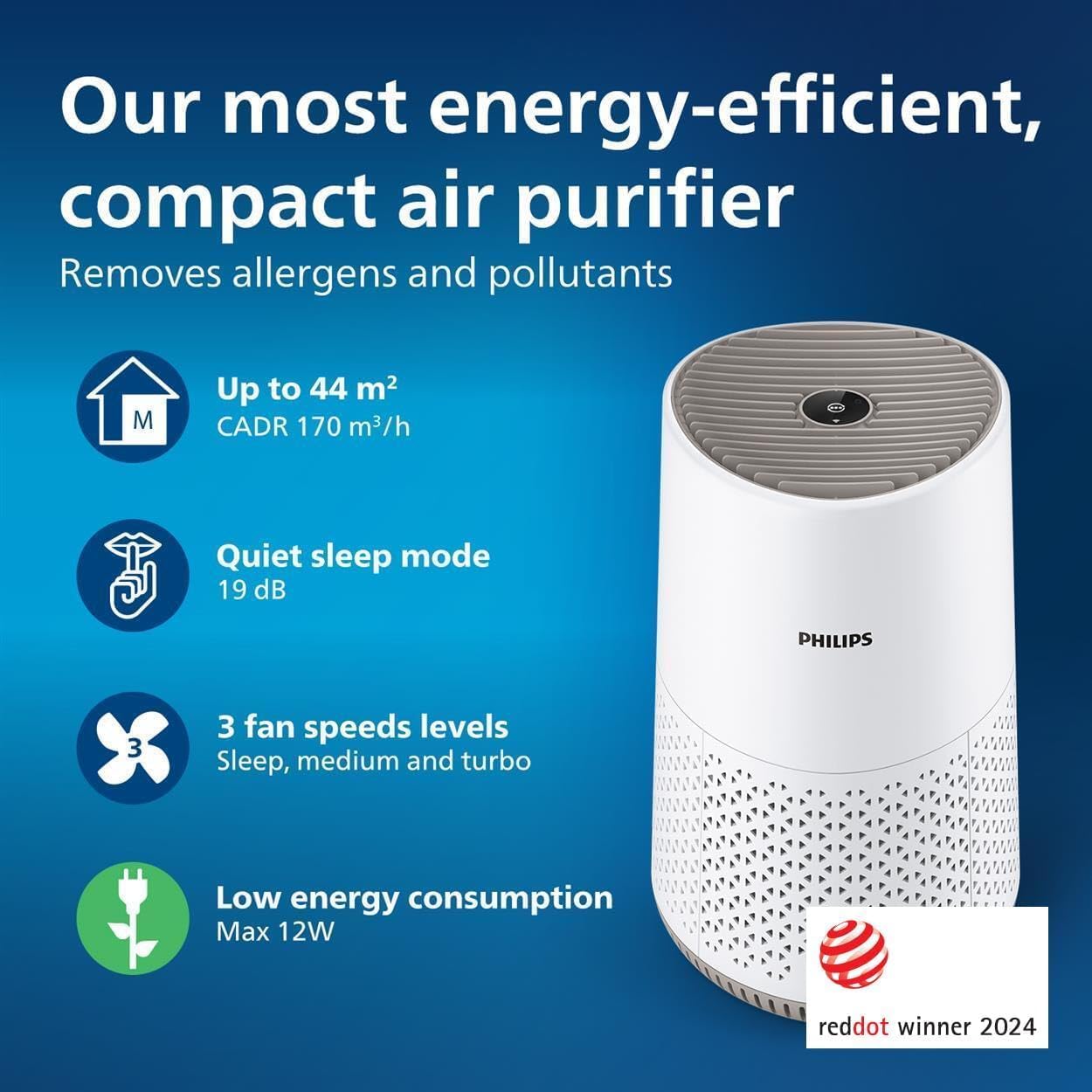
NanoProtect HEPARemoves 99.97% of particles down to 0.003 microns using an electrostatic charge alongside the HEPA media.
12W Running CostRuns on as little as 12 watts at max, one of the lower running costs in its class.
Covers Up To 39m²A CADR of 170m³/h clears a 39m² room in minutes.
Philips Air+ AppTurn it on or off, change speed, and check filter status from your phone.

Philips 600 Series Air Purifier AC0650/20

The AC0650/20 sits at the more efficient end of Philips's 600 Series, built around what Philips calls NanoProtect HEPA technology. Instead of relying purely on a mechanical filter to trap particles, it adds an electrostatic charge that pulls particles toward the filter media, which Philips states cleans up to twice as much air as a traditional HEPA H13 filter for the same fan effort. The result is a filtration system rated to remove 99.97% of particles down to 0.003 microns, covering PM2.5, pollen, dust and viruses.

Coverage is stated at 39m², with a clean air delivery rate of 170m³/h, meaning the fan can move that volume of filtered air through the room each hour on its highest setting. What stands out on this model is the power draw: Philips states it operates at a maximum of 12 watts, positioned as one of the most efficient purifiers in its category. Over months of continuous running, low wattage is the difference between a purifier you leave on all day and one you switch off to save on the bill.

Sleep mode brings noise down to 19dB, described by Philips as quieter than a whisper, and dims the digital display at the same time so neither the fan nor the screen disturbs a bedroom at night. The unit's compact, sleek casing is built to sit unobtrusively in a room rather than dominate it, which matters if it's going somewhere visible like a living room or home office.

The Philips Air+ app connects to the purifier for remote control: turning it on or off, adjusting fan speed, and checking when the filter needs attention, without walking over to the unit. The app also includes educational content on air purification, useful if this is a first purifier and you want to understand what the numbers actually mean for your room.

For anyone weighing up purifiers by day-to-day running cost as much as upfront price, the AC0650/20's low wattage is the standout figure here. It suits a bedroom or home office up to around 39m² where quiet, efficient, app-checked operation matters more than maximum room coverage.

Specifications

BrandPhilips
Series600 Series (AC0650/20)
Filtration TechnologyNanoProtect HEPA with electrostatic charge
Particle Removal99.97% of particles down to 0.003 microns
Room CoverageUp to 39m²
Clean Air Delivery Rate170m³/h
Power DrawMax. 12W
Noise Level19dB in sleep mode
ConnectivityPhilips Air+ app
ColourWhite

Philips 600 Series Air Purifier AC0650/20

£99 £79 inc. VAT

Free United Kingdom delivery · easy returns · secure checkout

Frequently Asked Questions

What room size is the Philips AC0650/20 designed for?

Philips rates it for rooms up to 39m², using a clean air delivery rate of 170m³/h on its highest fan speed. It suits a bedroom, home office or smaller living room rather than an open-plan space.

What does NanoProtect HEPA actually do?

It combines a physical HEPA filter with an electrostatic charge that pulls particles toward the filter media. Philips states this removes 99.97% of particles down to 0.003 microns and cleans more air per minute than a standard HEPA H13 filter alone.

How much electricity does it use?

Philips states a maximum draw of 12 watts, similar to a small household lamp, which keeps running costs low if you plan to leave it on for extended periods.

Is it quiet enough for a bedroom?

In sleep mode it runs at 19dB, described by Philips as quieter than a whisper, and the digital display dims at the same time so it does not glow in a dark room.

Does it need the app to work?

No. It works as a standalone appliance with its own controls; the Philips Air+ app is an optional extra for remote on/off, speed adjustment and filter status.

What does the app let me do?

You can turn the purifier on and off, adjust fan speed, and check filter status from your phone, plus read in-app articles on air purification if you want more background.

Will it help with pollen allergies?

The HEPA filtration is rated to remove particles down to 0.003 microns, which covers pollen, so it can reduce airborne pollen circulating in the room. It works alongside, not instead of, general allergy management.

Does it remove pet dander?

The same 99.97% particle removal claim covers fine particles like pet dander that become airborne, though it will not remove hair or dander already settled on surfaces.

Does it handle cooking or smoking odours?

The listing focuses on particle filtration rather than a dedicated carbon odour layer; check the specific listing details if strong odour control is your main priority.

How do I know when to change the filter?

The Philips Air+ app monitors and reports filter status, so you get a notification rather than having to guess or check manually.

What colour does it come in?

White, in line with its compact, understated design intended to blend into most rooms.

Is it a good energy efficient air purifier for a small living room?

Its low 12W maximum draw and 39m² coverage make it a reasonable fit for a small to medium living room where running cost matters, though a larger open-plan space would suit a higher-coverage model better.

Can I use it without the app connected to WiFi?

Yes, the physical controls on the unit operate it fully; the app is for remote and monitoring convenience, not a requirement to run the purifier.

Does it have a physical display?

Yes, a digital display that dims automatically in sleep mode so it does not add light to a dark bedroom.

Is this the same as other Philips 600 Series models?

It's part of the same 600 Series family and shares the core NanoProtect HEPA filtration, but individual listings can differ in app connectivity and smart sensor features. Check each product page's own specs before choosing between them.

Will it work in an open-plan kitchen-diner?

Its stated coverage is 39m², so a larger open-plan space may exceed what it is rated to clean efficiently; a higher-coverage model in our Premium HEPA range would suit a bigger area better.

Does it filter viruses?

Philips states the filtration removes particles down to 0.003 microns, a size range that includes many airborne viruses, though it is not a medical device and should not be relied on as a substitute for other precautions.

How do I clean the outside of the unit?

Wipe the casing with a soft, dry cloth. Avoid liquids near the vents and never submerge any part of the unit.

Is it suitable for a nursery?

Its low noise sleep mode and dimmable display suit a nursery in terms of running quietly overnight, though always follow the manufacturer's placement guidance around young children.

What's included in the box?

The purifier unit itself; check the product listing photos for the exact accessories included with this specific model.

Does it come with a warranty from Philips?

A specific warranty length is not confirmed in our product record, so we do not want to state a figure we cannot stand behind. Your statutory rights apply regardless.

How do I set it up?

Plug it in and switch it on using the physical controls; if you want app control, download Philips Air+ and follow the in-app pairing steps.

Can I run it continuously all day?

Yes, its low power draw is specifically suited to extended or continuous running without a high electricity cost.

Does the fan speed adjust automatically?

Check this specific listing's own specs for auto-sensing behaviour; some models in the range include an automatic sensor mode while base models use manual speed settings.

Is 39m² the same as roughly 420 square feet?

Yes, 39m² converts to approximately 420 square feet, useful if you're more used to imperial room measurements.

What's the best air purifier for a home office?

A model like this one, rated for a room in the 30 to 40m² range with low running cost and app monitoring, suits a home office where the purifier may run for long stretches during the working day.

Do you deliver, and how long does it take?

Yes, we deliver this item. Your delivery estimate and any options are shown at checkout before you pay, so you can see the timing for your address first.

What are the delivery costs?

Any delivery charge is worked out at checkout based on your address and is shown before you confirm the order. There are no hidden fees added after you pay.

Can I return it if it does not suit my room?

Yes. If it is not right, you can return it in line with our returns policy. Keep the packaging where you can, as it makes the return tidier and safer.

It arrived and it is not what I hoped for. What now?

Get in touch and we will sort it out. Whether it is a fault, a missing part or simply the wrong fit for your room, we would rather put it right than leave you with something you will not use.

Air purifier running costs: why watts matter as much as coverage

5 min read AeroClean Home

Most people compare air purifiers on room coverage and filter grade, and rarely look past those two numbers to what it actually costs to run one for months at a time. The Philips 600 Series AC0650/20 is a useful case study, because Philips puts a specific number on its power draw: a maximum of 12 watts. That's an unusually low figure for a standalone appliance, and it's worth understanding what it means before you buy, and what other purifiers in this catalogue trade off to hit higher room coverage.

Why wattage is the hidden number on the box

Air purifier listings lead with coverage area and filter grade because those are easy to compare at a glance. Wattage rarely gets the same billing, but it determines what the appliance costs you every month it runs. A purifier drawing 12 watts continuously for 24 hours uses roughly 0.288 kWh a day. A unit drawing 40 or 50 watts at a similar duty cycle uses three to four times that, which adds up over a heating season or a pollen-heavy summer when you might run a purifier non-stop for weeks.

The AC0650/20 achieves its low draw partly through Philips's NanoProtect HEPA approach, which pairs a standard HEPA filter with an electrostatic charge. The charge helps pull particles toward the filter media rather than relying purely on fan force to push air through denser filter material, so the motor doesn't have to work as hard to hit the same filtration numbers. Philips states this lets the unit clean up to twice as much air as a traditional HEPA H13 filter would for the same effort, which is effectively where the energy saving comes from.

What 39m² actually covers

Coverage is stated at 39m², with a clean air delivery rate of 170 cubic metres per hour on the highest fan setting. That translates to a decent-sized bedroom, a home office, or a smaller open-plan living space, but it isn't intended for a large open-plan kitchen-diner or a double reception room. If your space is noticeably bigger than 39m², a higher-coverage model will clean it faster and more thoroughly rather than running flat out just to keep pace, even if that model draws more power to do it.

Matching the purifier to the room rather than buying the biggest number available is the right approach either way. An oversized purifier for a small room mostly means it runs on a low, quiet setting most of the time, which is fine. A purifier that's too small for its room runs at maximum speed constantly, which is louder, uses more power over time regardless of its rated wattage, and still may not keep up during high-pollen periods.

Sleep mode and where it makes sense to place this unit

At 19dB in sleep mode, described by Philips as quieter than a whisper, this is a genuinely appropriate purifier for an adult bedroom overnight. The display dims automatically in this mode too, so it won't add a stray light source to a dark room. Its compact, understated casing is designed to sit in a visible space like a living room or office without drawing attention, which matters if appearance is part of your decision alongside performance.

Where it's less suited is a large, high-traffic area or a household that wants a single purifier to cover an entire ground floor. The 39m² rating is honest about its limits, and running it in a much bigger space just means it's working harder than its efficient design is built for.

The Philips Air+ app: worth using, not essential

The app adds remote on/off, fan speed adjustment, and filter status notifications, plus some educational content about air purification generally. None of this changes how the unit filters air; it's a convenience layer. If you're the sort of household that likes checking and adjusting appliances from a phone, it's a genuine bonus. If you'd rather just plug it in and forget about it beyond routine filter changes, the physical controls do exactly the same job without ever opening an app.

The filter status monitoring is arguably the most useful part of the app for most households, since it removes the guesswork around when a filter actually needs attention rather than relying on a fixed calendar reminder that may not match how much the unit has actually run.

Weighing efficiency against raw coverage

If your priority is running an air purifier close to continuously in a moderately sized room without worrying about the electricity bill, the AC0650/20's low wattage is a genuine practical advantage over less efficient alternatives at a similar price. If you need to cover a much larger space, it's worth comparing this model's efficiency against a higher-coverage purifier's running cost at the wattage it actually needs to clean your room size, rather than assuming a lower headline wattage always means a lower total running cost for your specific space.

The short version

Check your room size against the 39m² rating first. If it fits, the 12W draw and 19dB sleep mode make this one of the cheaper purifiers in this catalogue to run continuously, with app monitoring as a genuine convenience rather than a gimmick. If your room is bigger, look at a higher-coverage model instead of asking this one to do more than Philips built it for.

Browse all smart & app-controlled

Wondering if 12 watts is actually low?

Tell us how long you plan to run it each day and we'll help you work out what it actually costs versus a higher-power model.

Still deciding? Ask us a question and we'll help you choose.

Page summary

The Philips 600 Series AC0650/20 is a HEPA air purifier rated for rooms up to 39m², with a clean air delivery rate of 170m³/h. Its NanoProtect HEPA filter uses an electrostatic charge to remove 99.97% of particles down to 0.003 microns. It draws a maximum of 12 watts, one of the lower running costs in its class, and drops to 19dB noise in sleep mode with a dimmed display. The Philips Air+ app adds remote on/off, speed adjustment and filter status checks. It is white and priced at £79 (was £99) at AeroClean Home. Weight, dimensions and country of origin are not specified in this record.

Philips 600 Series Air Purifier AC0650/20 £99 £79